
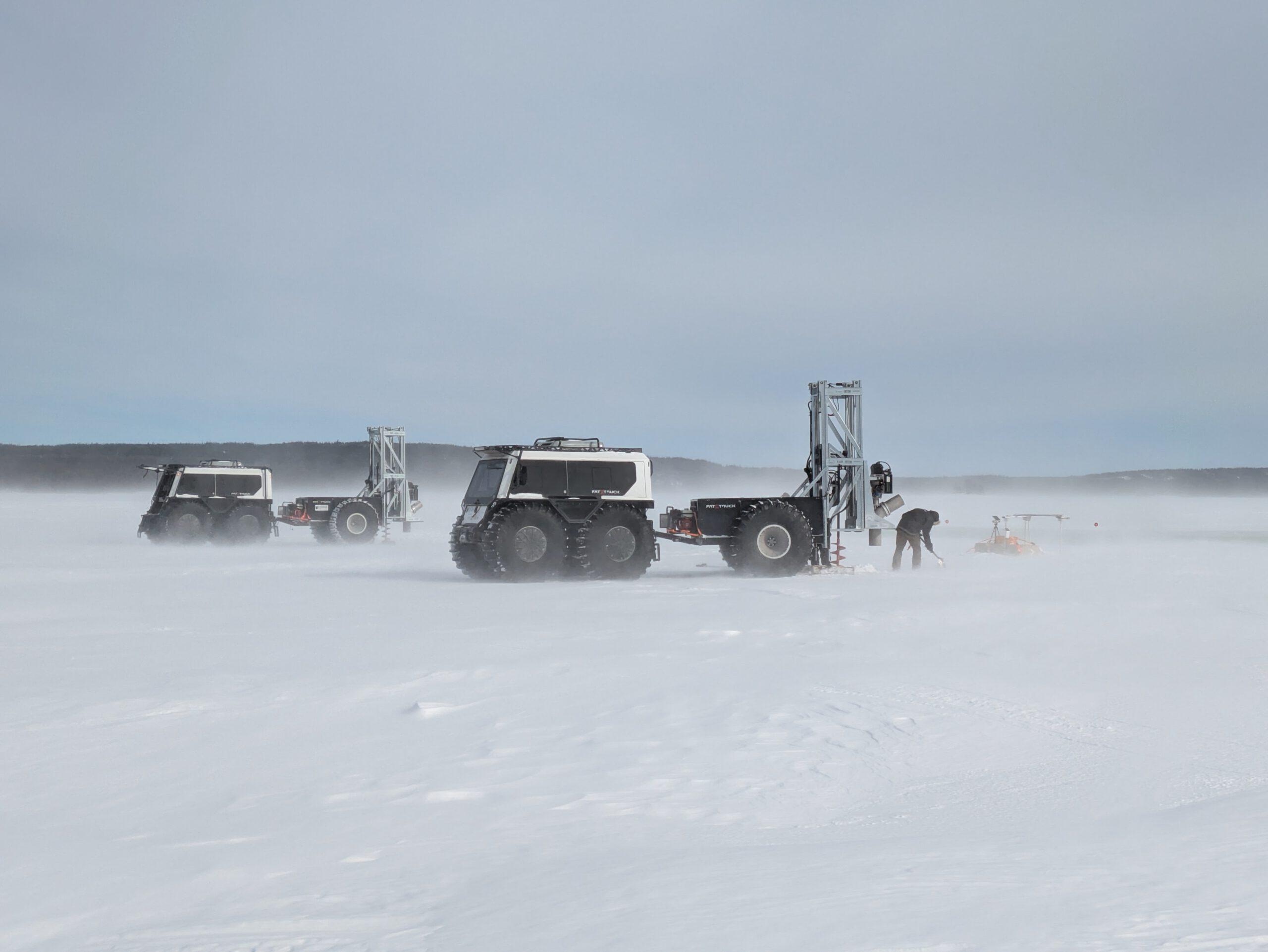
Our second field test was conducted between February and May 2025, in the Milan Arm of Pistolet Bay in northern Newfoundland, Canada. This time around, we installed new and improved measurement stations, and used larger, custom-made flood pumps. The scale of the operations was also much larger, both in time and space than in our first field test in Svalbard. Though not in the Arctic, northern Newfoundland was selected to derisk the logistics, while applying the local knowledge of the sea ice conditions from our team. It also offered the opportunity to work with very variable weather conditions, which might mimic the conditions of the Arctic in the future.
Our main objectives in the field tests were to:
- Expand the ice thickening operations; test and validate the custom-made pump under variable sub-arctic conditions.
- Understand the floodwater distribution by observing how snow depth, topography and weather conditions influence the spread of the pumped sea water.
- Determine whether a larger surface of thickened ice lasts longer into the melting season than the un-thickened reference ice, and measure how flooding affects reflectivity (albedo) across freezing and melting phases.
Our main findings
These field tests in Newfoundland have provided us with a wealth of data and practical operational and logistical experience about a somewhat larger scale of ice thickening experiment.
- We successfully thickened 9 hectares of ice by 10-25 percent, which was 10x larger than the previous field test in Svalbard.
- Due to challenging weather conditions, such as rain and above-freezing temperatures, assessing if sea ice thickening made the ice last longer versus a control site proved difficult.
- However, the thickened sites were clearly visible from space and marginally whiter than their surroundings once the snow cover was absent in the melting season, validating a phenomenon noted in our earlier field test.
- Surprisingly, the flooded sea ice area below the snow layer, as inferred from thermal images, turned out to be 50 percent larger than the area inferred from the optical images, highlighting the novelty and effectiveness of applying aerial drone imaging with optical and thermal capabilities.
- We learned many lessons in operations and logistics, which will improve our future field tests.
Further research for the following field tests
Going forward, we will continue to collect even more comprehensive data on the impact of ice thickening on sea ice longevity for the sake of validating ice thickening as a robust climate intervention.
- How effective is flooding the snow layer at disrupting the thermal insulation of the snow and accelerating bottom ice growth?
- How and at what rate does brine drain from the flooded layer?
- How is the ice composition influenced by sea ice thickening?
- What is the relationship between snow properties and floodwater distribution over and through snow?
- How much thickening and over how much area is necessary for a measurable impact on sea ice longevity?
- Why is there a higher albedo observed at the thickened sites during part of the melting phase?
- What are the impacts of sea ice thickening on sea ice ecology?
The Team
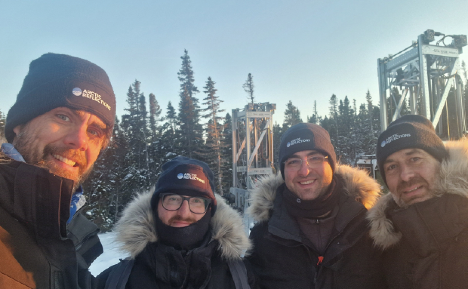
Fonger Ypma, Tom Meijeraan, Cody Owen, Soroosh Afzali and Willem Schellingerhout (not pictured here).
Reports from Newfoundland
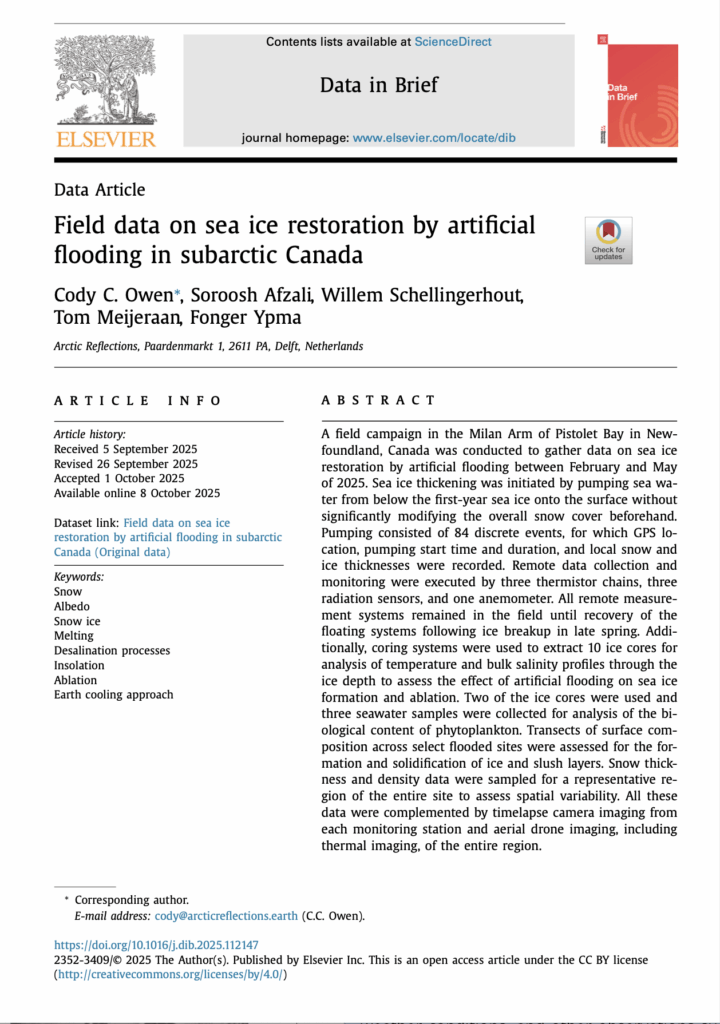
Cody C. Owen, Soroosh Afzali, Willem Schellingerhout, Tom Meijeraan, Fonger Ypma – Field data on sea ice restoration by artificial flooding in subarctic Canada (2025)
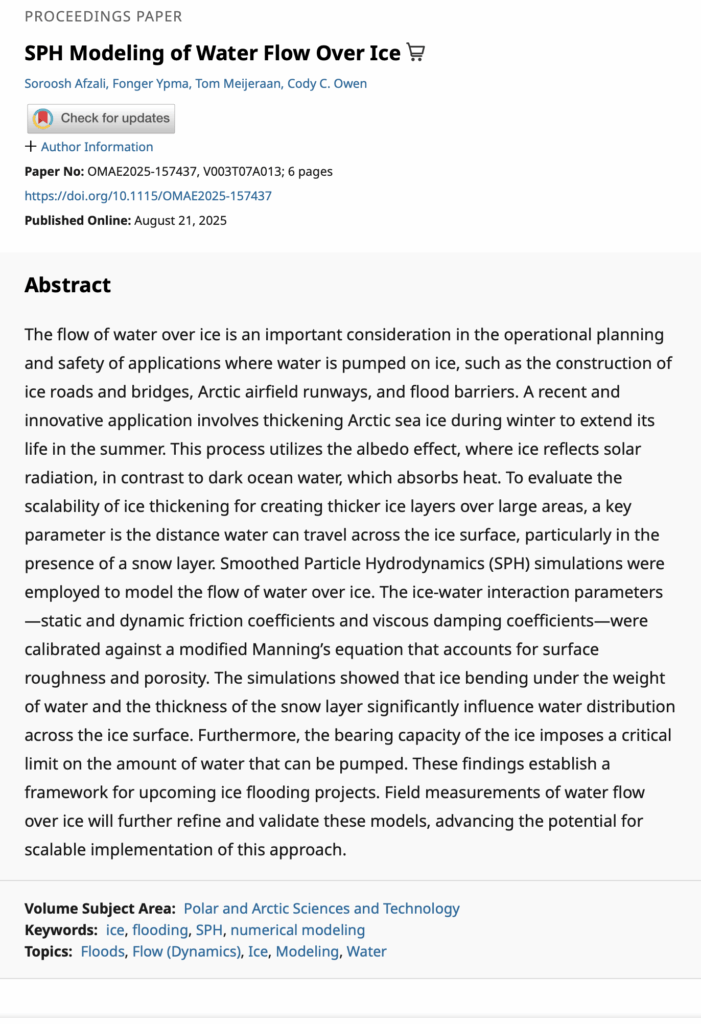
Soroosh Afzali, Fonger Ypma, Tom Meijeraan, Cody C. Owen – SPH Modeling of water flow over ice (2025)
Updates from Newfoundland
-
·
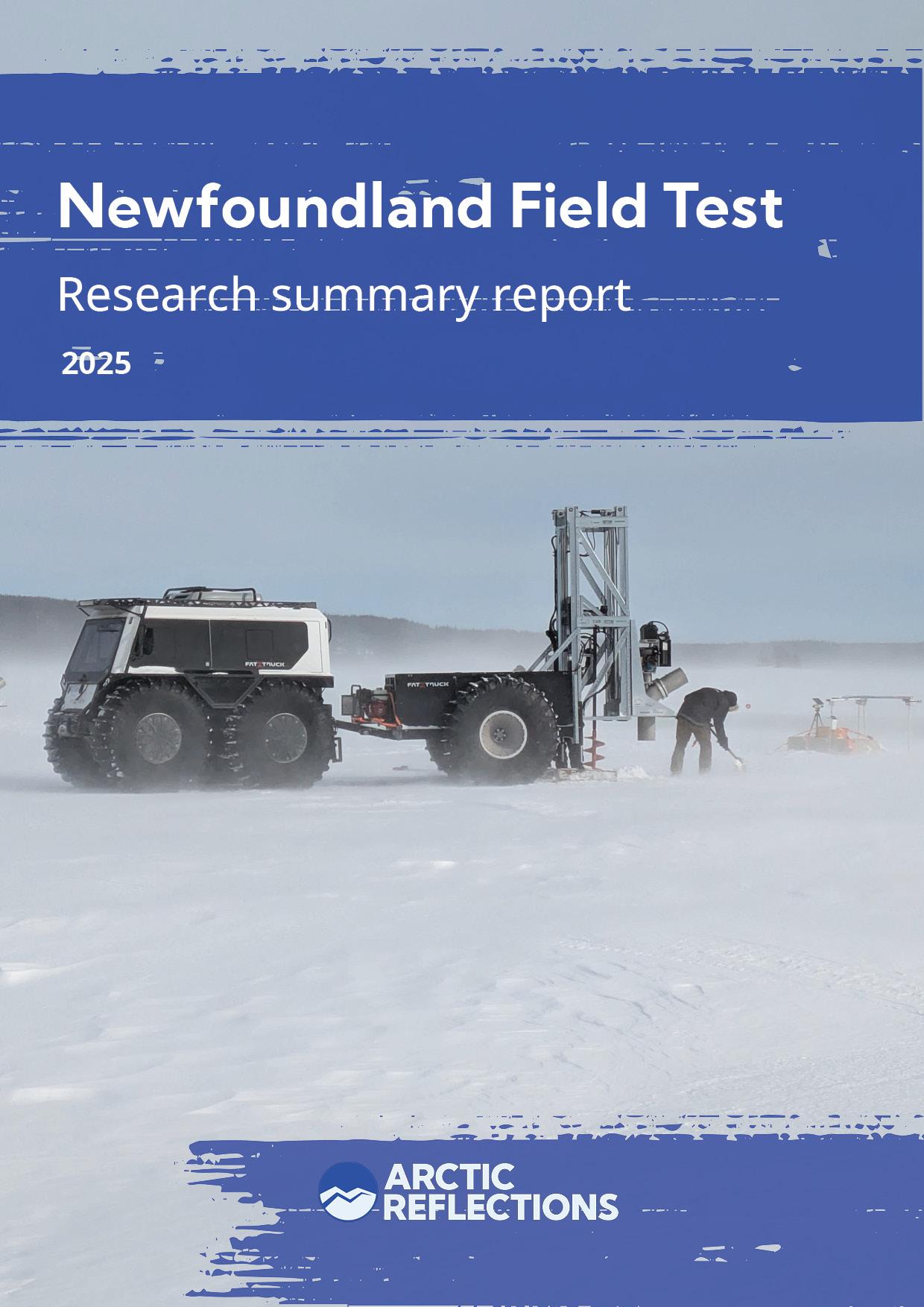
Now available: Research Summary Report from the Newfoundland field test 2025
Earlier this year we conducted our second field test in Newfoundland, Canada to verify the potential impact of our ice thickening method. This field test yielded a wealth of data and observations. We summarized our findings in a Research Summary Report. You can view and download the report via the button below. If you have…
-
·
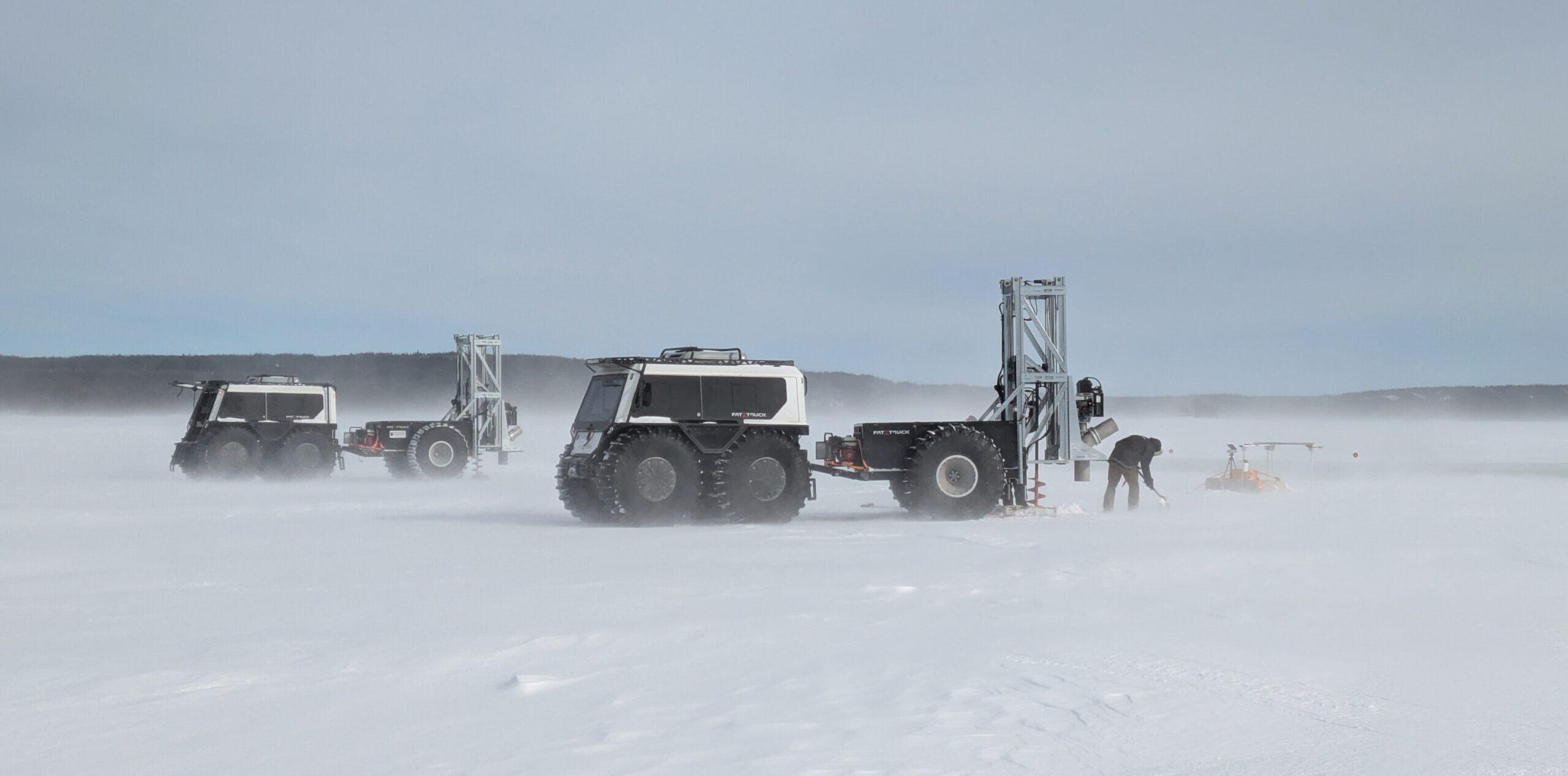
Into the Cold: Lessons from Our 2025 Field Test in Newfoundland
In early 2025, Arctic Reflections set out for the icy coastlines of Newfoundland, Canada, to conduct our most ambitious field test yet. Designed to push the boundaries of ice-thickening research, this mission was about more than just pumps and measurements. It was about testing resilience; of our system, of our data, and of our team.…