
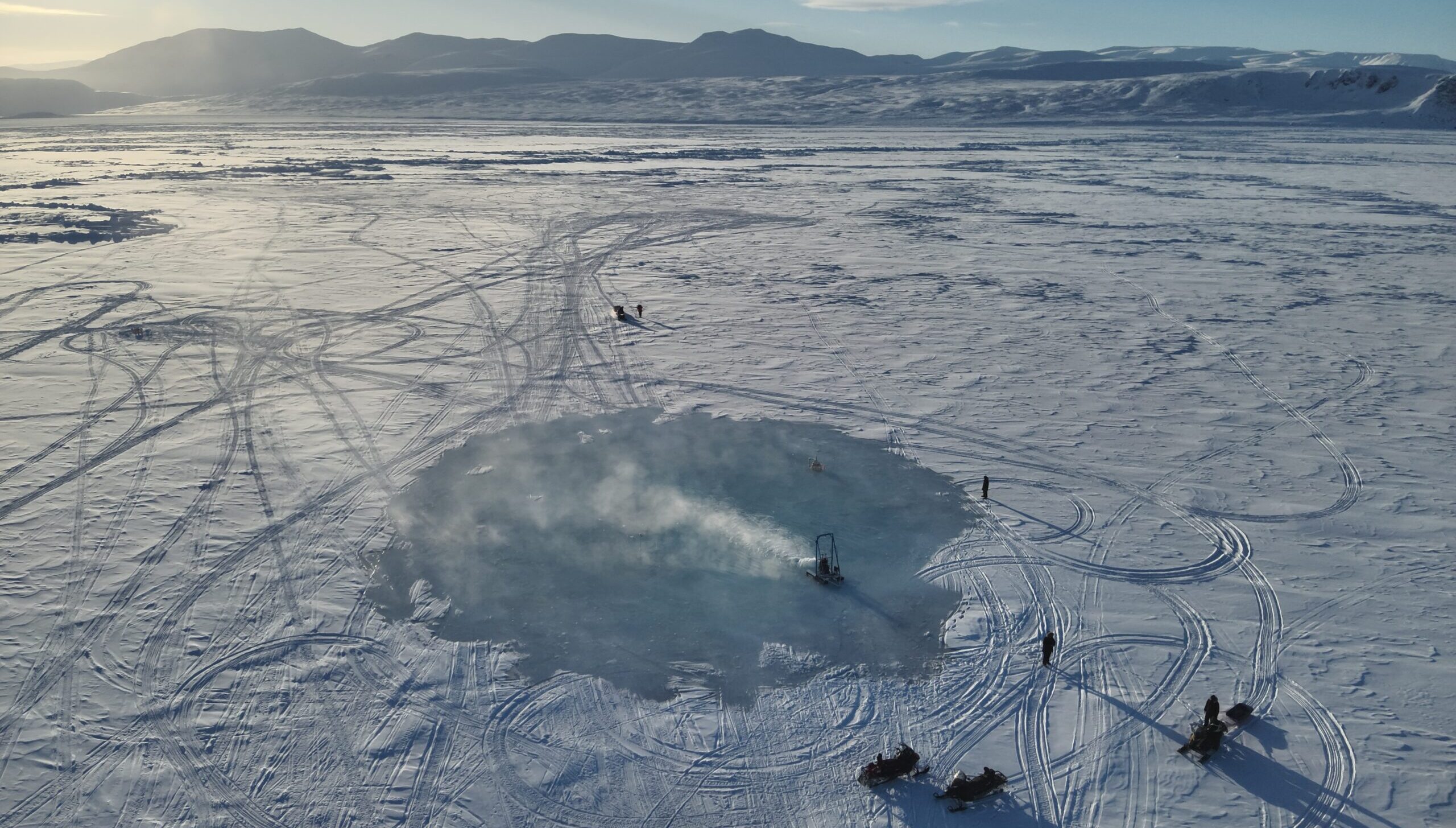
Researching sea ice thickening in the Arctic
Testing a simple technique
Sea ice thickening is a direct climate cooling approach aimed at thickening the ice by pumping sea water from below the ice onto its surface during the freezing winter months. So far, we have conducted three field tests across different contexts with the aim to explore the benefits and the risks of this methodology.
The hypothesis we are testing in our field tests and measurement campaigns consists of two parts:
- Pumping seawater from beneath the sea ice onto its surface during winter resulting in thicker ice cover than would naturally occur.
- Artificially thickened sea ice reflects more sunlight and survives longer into the melt season than naturally occurring ice. In particular, the salt in the flooded layer does not have a negative effect on the melt of the artificially thickened sea ice.
Reports, summaries and findings from each field test can be found below.
Svalbard ’24
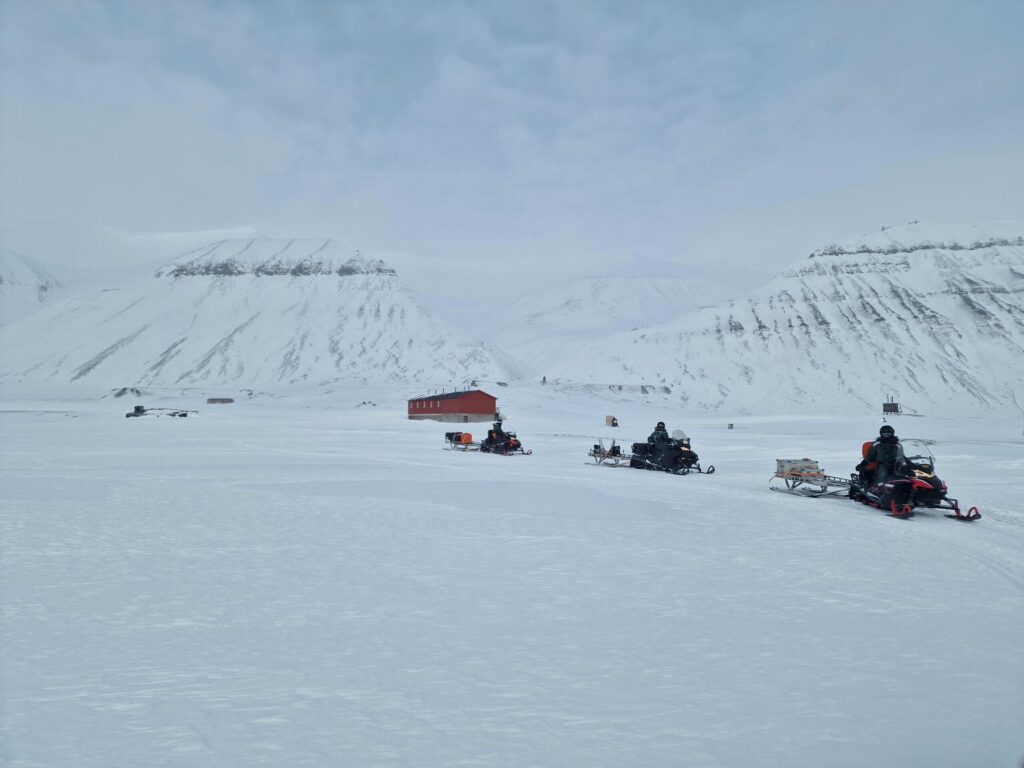
Read the summary and report from our first field test
Newfoundland ’25
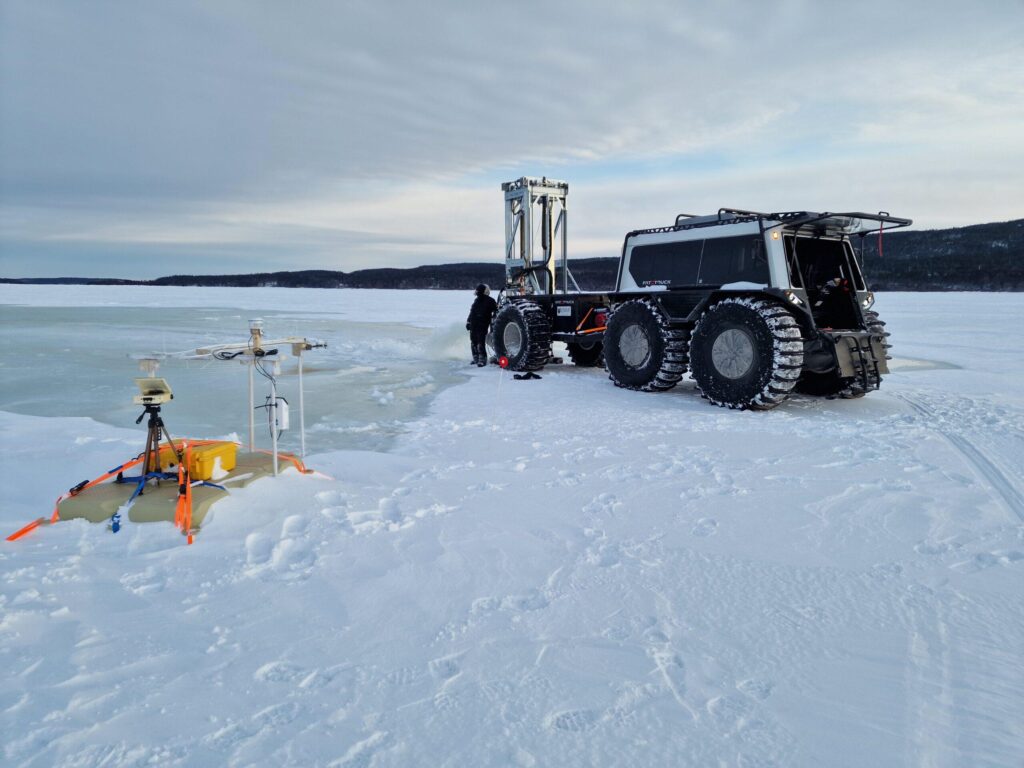
Read the summary and report from our second field test
Qikiqtarjuaq ’26
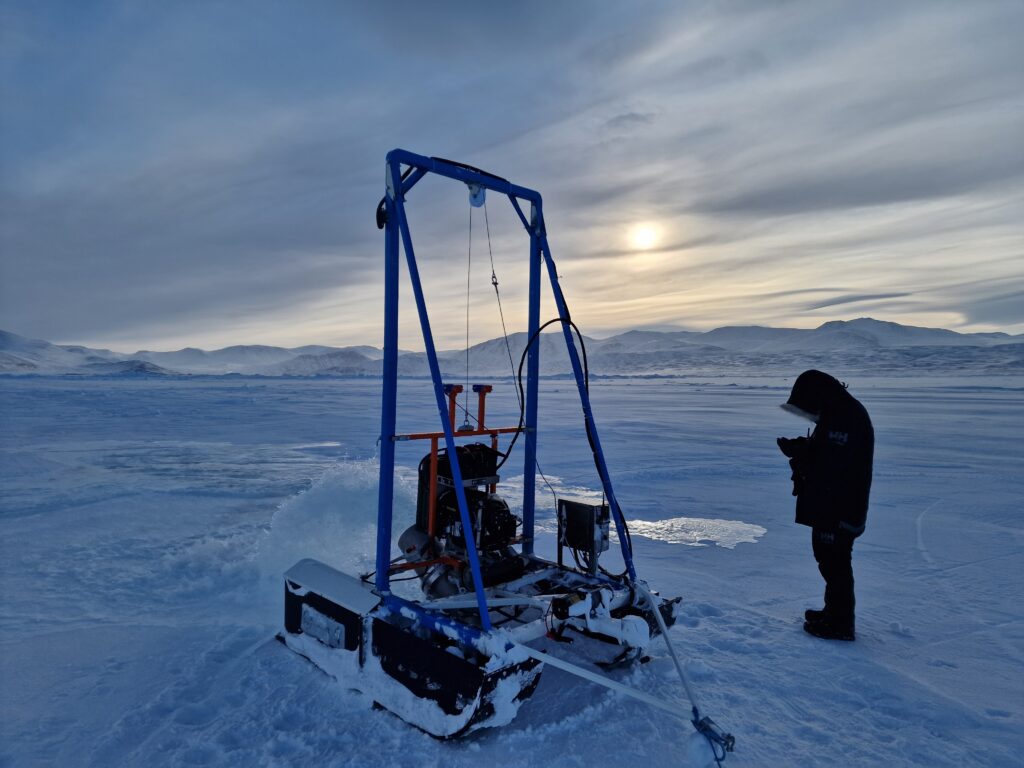
Read the initial findings from our third field test
Responsible research
We strive to conduct our field tests and measurement campaigns in an environmentally responsible way, and we conduct a comprehensive environmental impact assessments before each field test. We recognise the vital importance of engaging Inuit communities ethically and equitably in our work and are committed to aligning our practices with the Circumpolar Inuit Protocols for Equitable and Ethical Engagement, developed by the Inuit Circumpolar Council (ICC).
“This intervention is not an alternative to reducing CO₂ emissions. But is it responsible to have no plan B? We think we should have at least explored other options.”
Tom Meijeraan, Co-founder, Arctic Reflections