

Earlier this year, from 2 February to 8 March, we were in Qikiqtarjuaq, Nunavut in Canada, for our third field test on researching refreezing the Arctic sea ice. Our first field test was conducted in Svalbard (Norway), followed by one in Newfoundland.
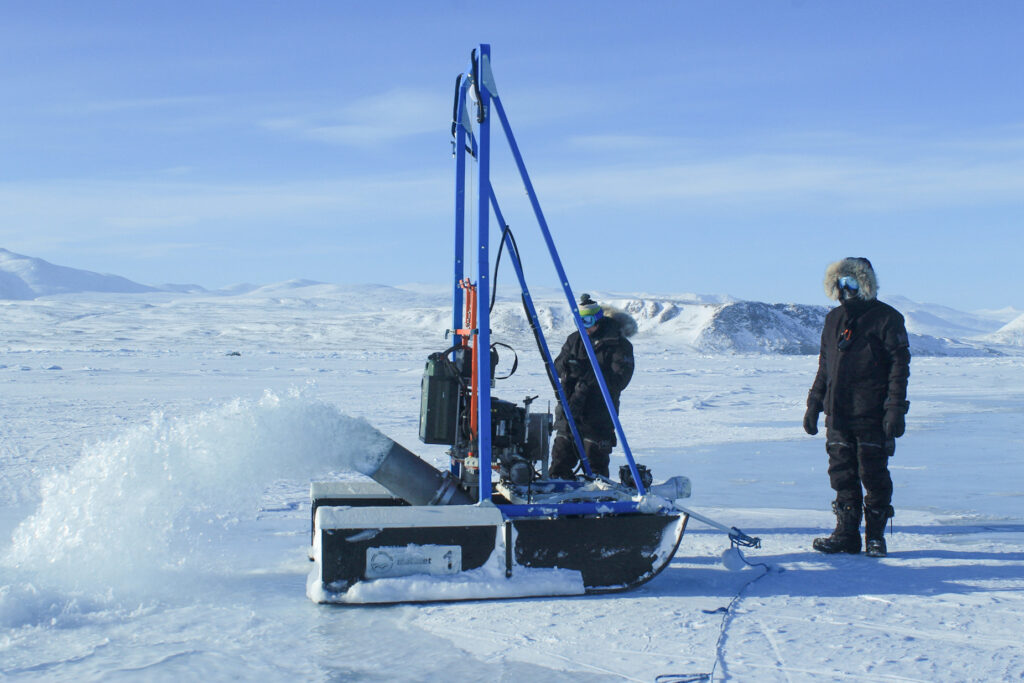
In February, we drilled holes into the sea ice and pumped the sea water from below on an estimated 17 Ha – roughly the size of 24 soccer fields.
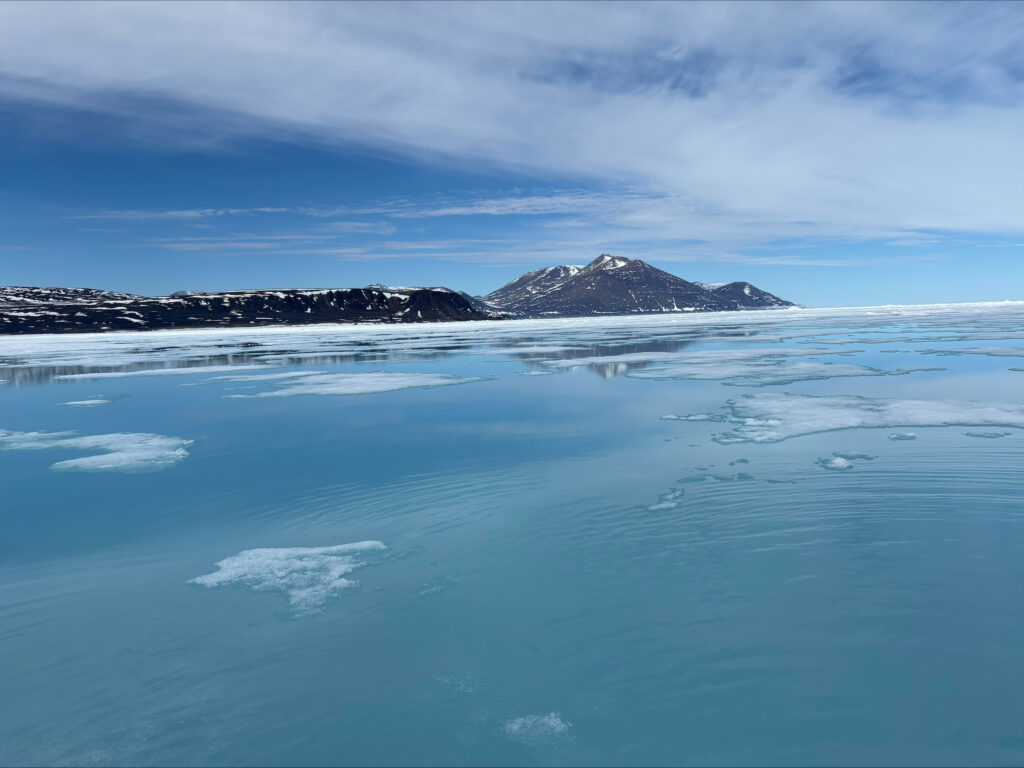
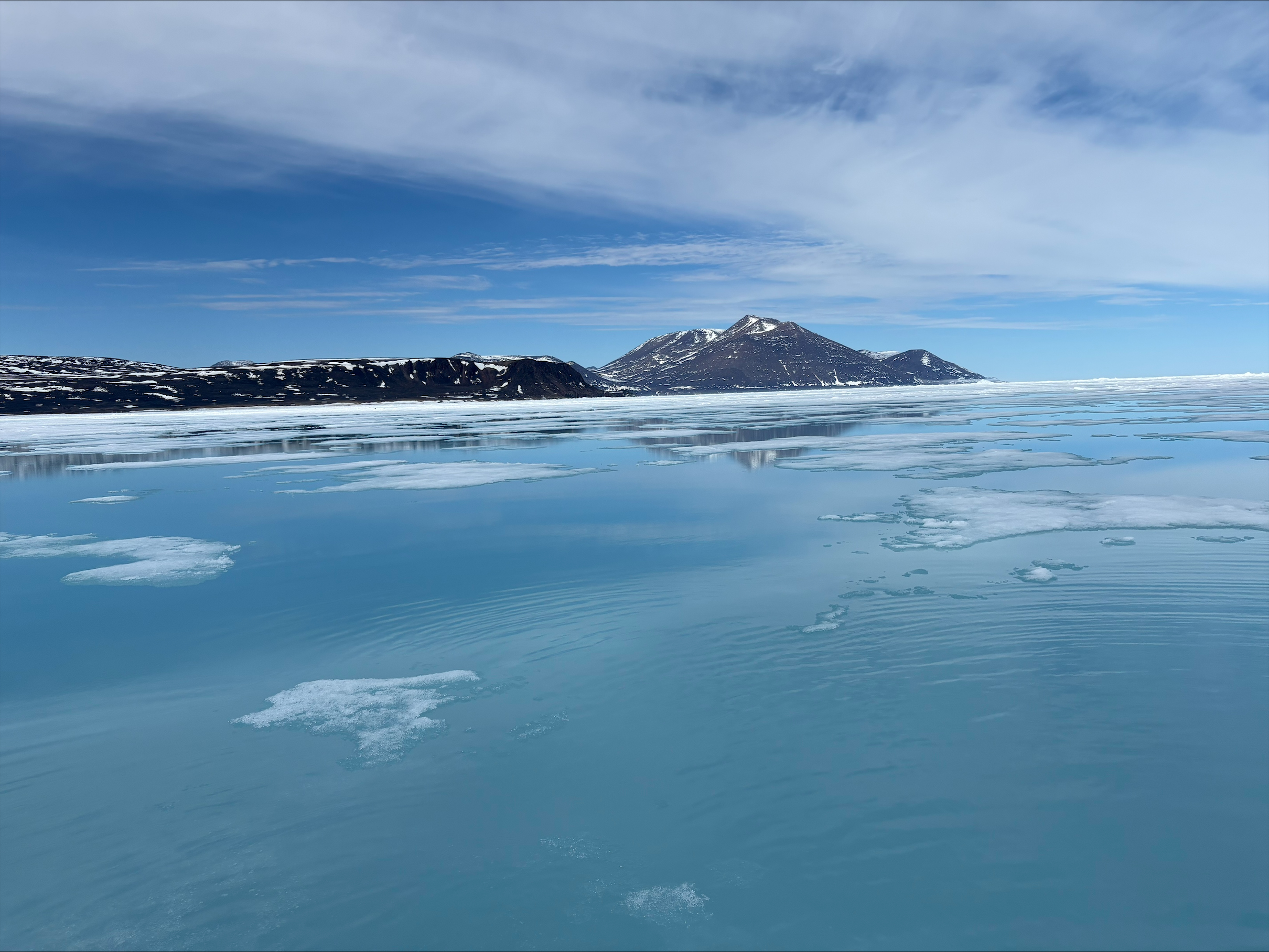
Now, as the melt season which started around mid-May, gets underway the conditions are radically different from when we thickened the sea ice. On the ice, the melting snow produces melt-ponds, which eventually drain through the sea ice. We need to take additional manual measurements on-site to confirm what we’ve been measuring remotely with thermistor chains and other devices. We also need to take ice cores for salinity and density which need to be done in person. This data, paired with aerial drone surveys gives us a more comprehensive picture of how the ice melts and desalinates than we’ve captured in previous tests of how the ice melts and desalinates.
So, a few of our team members are currently in Qikiqtarjuaq with three goals:
- To share the preliminary findings of our research with the community, and to consult on our plans for field test next winter.
- To work with local sea ice experts on end-of-season fieldwork before the ice melts.
- And, to fix and prepare the equipment for next winter.