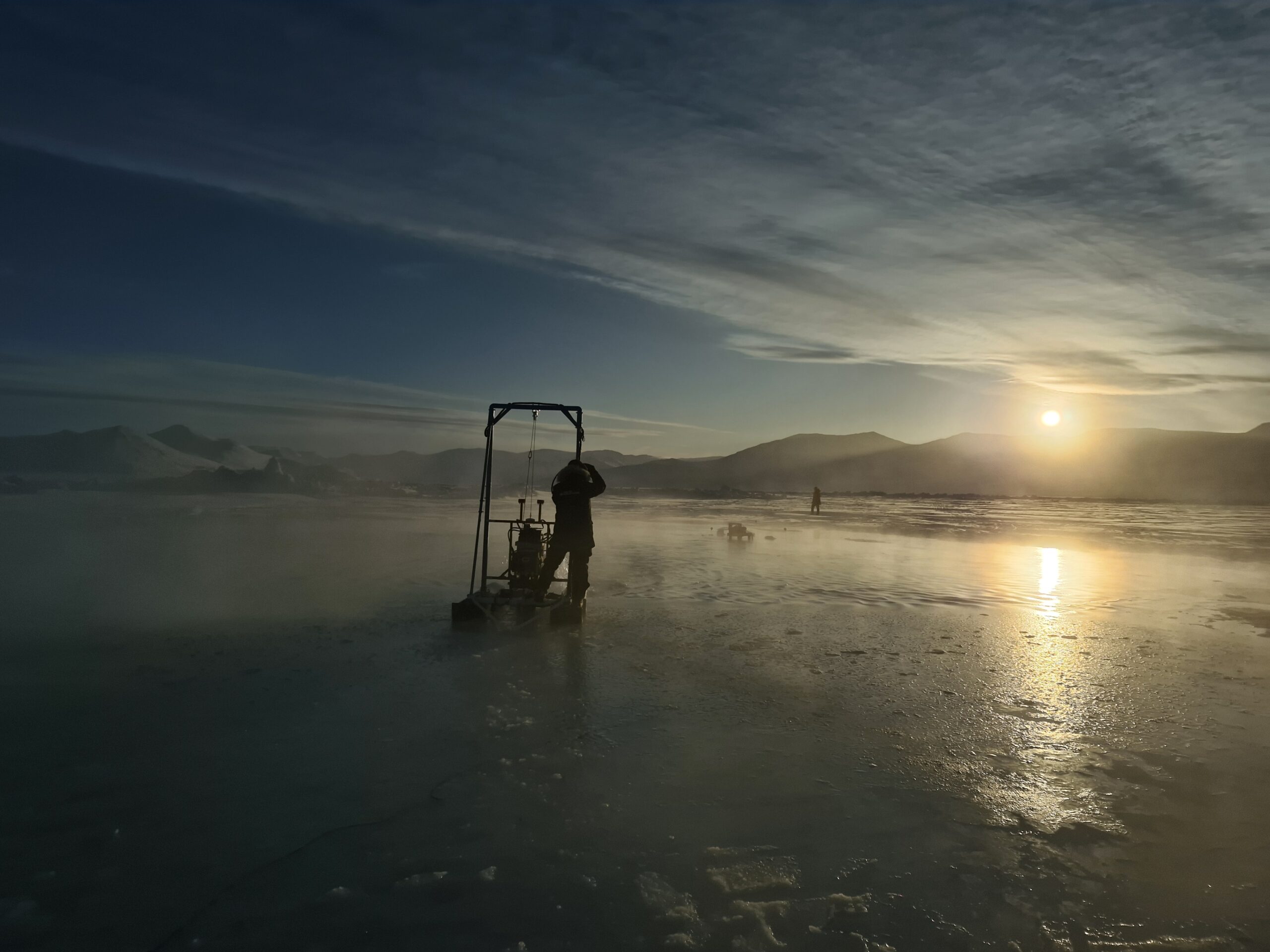

Since our return from our third field test in Qikiqtarjuaq, Nunavut in Canada, we’ve been busy sorting through all the data we collected over six weeks. The videos below provide a first-hand account of our field test.
What we set out to do
- Conduct a more extensive measurement campaign, which included more elaborate measurements such as frequent drone flights during both the melting and the pumping phase, as well as measuring and monitoring the properties of thickened against reference ice;
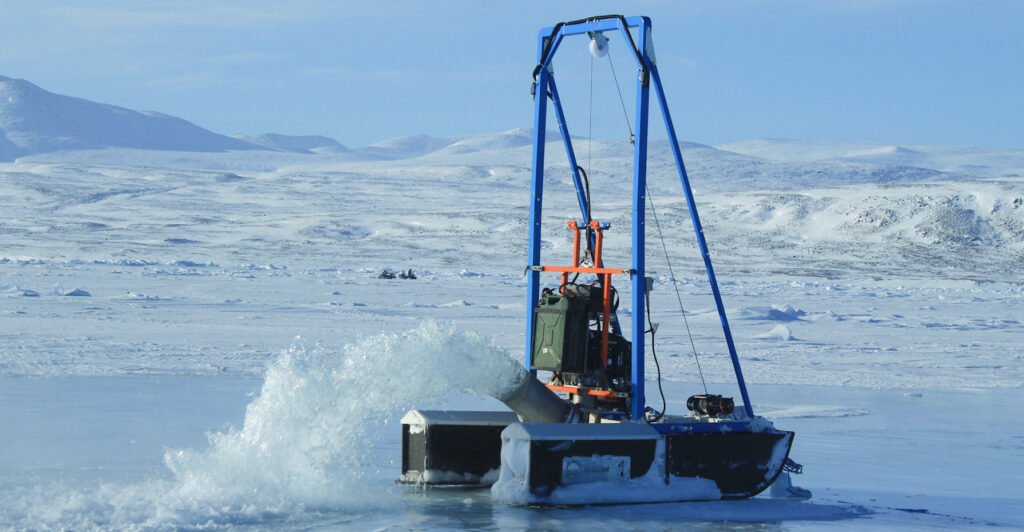
- Test the new and improved pumping platform we developed;
- Collaborate with the local Inuit community, and a broader group of scientists, including ecologists and sea ice experts who will join the expedition.
We’re happy that we met all three of our core objectives.
What we measured
Our drone flights were a highlight of the measurement campaign, giving us detailed aerial data across different phases of the ice cycle.
We also deployed several devices directly in the ice to track ice thickness over time. These will continue monitoring the ice as it melts through the summer month giving us a longer-term dataset to work with.
The team
This expedition brought together a diverse team. In addition to our core crew we were joined by scientists and local Inuit sea ice experts – including an expert conducting tests on the ecology of the sea ice – whose knowledge proved invaluable at every stage. Meet Team 1 and Team 2.
The expedition also drew media attention, with coverage from Dutch and Belgian news outlets. Raising public awareness about the importance of the Arctic sea ice and the crucial role it plays in maintaining a habitable planet is a vital aspect of our work.
The pumping platform
Our redesigned pumping platform performed well under trying field conditions. There were some logistical challenges like transporting the pumps over ridged and uneven ice, but overall, the improvements we made held up. We came away with a much clearer picture of how to refine our technology further.
Rooted in local knowledge
This field test would not have been possible without the expertise and support of the local Inuit community and sea ice experts. We selected our field test site based on their advice, and they helped us with the tools and technology to navigate the ice. We’re very grateful for their partnership.