


As global temperatures rise, the ocean is changing faster than almost any other system on Earth and receiving far less attention than it deserves. Climate week NYC, which runs from 20 to 27 September, connects governments, businesses, scientists, civil society around ideas for building a low-carbon economy and a more secure future. This year, Arctic Reflections will contribute to three sessions, joining other in making the case for the ocean to play a more central role in how we talk about climate solutions.
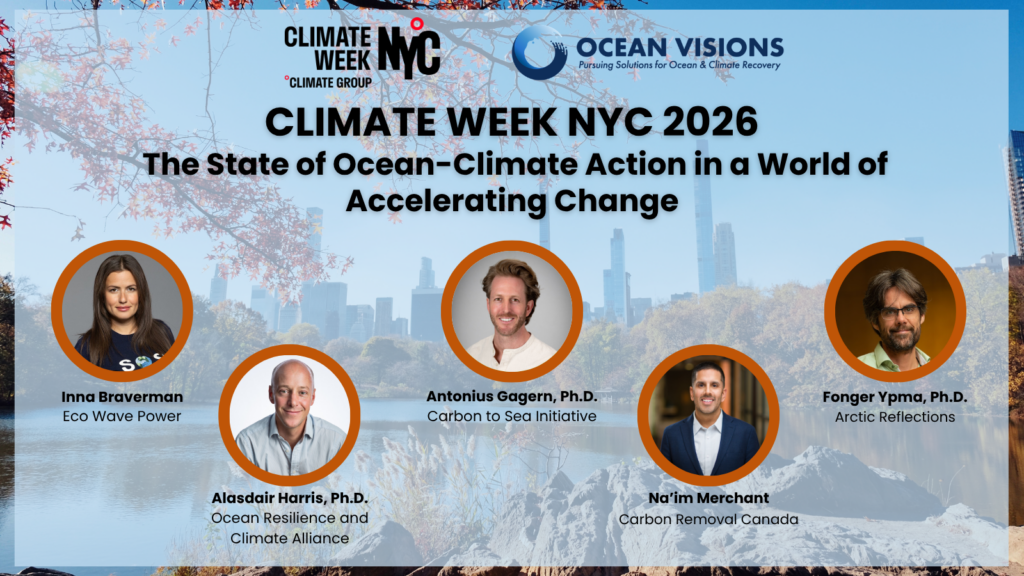
1. The State of Ocean-Climate Action in a World of Accelerating Change
Where: New York City Bar Association organised by Ocean Visions
When: September 22, 9:00AM -13:00PM
This event will explore the some of the thorniest challenges at the ocean-climate nexus while spotlighting emerging and potential ocean-based approaches to accelerate the transition to net zero and real zero, clean-up massive amounts of legacy CO₂, repair and restore critical ocean systems, and build global momentum for ocean-climate action.
More on this: https://luma.com/4buvky7v
2. What is the ocean worth?
Where: Main Stage organised by the Nest Campus
When: September 23, 2:30PM – 2:55PM
Ocean leaders — from Australia’s Great Barrier Reef to the Arctic — make the case that you cannot address global warming without talking about the ocean.
More on this: https://www.thenestclimatecampus.com/session/what-is-the-ocean-worth
3. On a mission to preserve Arctic sea ice
Where: Momentum Stage organised by the Nest Campus
When: September 24, 10:25AM – 10:45AM
The loss of sea ice threatens the entire planetary climate system. Built on research partnerships with indigenous communities, academic institutions, and industry, this research explores targeted sea ice restoration as a possible climate solution.
More on this: https://www.thenestclimatecampus.com/session/on-a-mission-to-preserve-arctic-sea-ice
The ocean generates up to 80% of the world’s oxygen, absorbs most of the excess heat, and regulates the climate systems that make life on land possible. Its surface determines how much of the sun’s energy is reflected and how much it absorbs. As the Arctic sea ice thin, one of the planet’s most effective mirrors is disappearing, leaving the darker ocean to draw in the heat. The ocean needs a more central role in climate conversations, and we intend to play our part in making that happen. Join us.